A Blue Ocean Worth Billions in Its Wild Growth Phase: Analysis of the Current State and Future Landscape of the Global Automotive Wrap Market
The global automotive wrap (vehicle color change/wrap) market is rapidly ascending from the fringes of the automotive aftermarket to become one of its most promising growth segments.
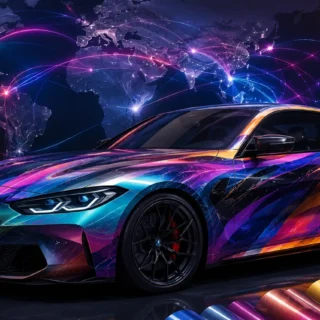
Introduction: A "Golden Track" Booming Amidst a Lack of Standards
The global automotive wrap (vehicle color change/wrap) market is rapidly ascending from the fringes of the automotive aftermarket to become one of its most promising growth segments. It is currently in a classic phase of "wild growth": market demand is exploding, technology is iterating rapidly, and new entrants are swarming in. Yet, unified industry standards, regulated service systems, and a clear brand landscape are far from established. It is precisely within this context of simultaneous chaos and opportunity that a new era, driven by personalized demand and decided by design capability, is unfolding.
The Standards Dilemma: Industry Norms Lag Behind Market Explosion
One of the most significant challenges facing the global automotive wrap industry is the lack of a unified, mandatory international standard system. This leads to uneven product quality, inconsistent application processes, and difficulties in protecting consumer rights.
1. Fragmented Standards and Regulatory Gaps
While general standards like ISO 9001 (Quality Management Systems) and ASTM D4956 (for retroreflective materials), as well as regional environmental regulations like EU REACH, exist, there is no complete, authoritative, and widely adopted mandatory standard system globally for the specific product of automotive wrap films concerning material performance, durability, environmental friendliness, and installation specifications. This issue is particularly acute in the Chinese market, where professional industry testing and research are largely non-existent, product parameters are often self-reported by manufacturers, and market supervision lacks a basis.
2. Immature Certification Systems and Nascent Market Trust
In mature markets like North America, the industry has begun to rely on manufacturer certification programs (e.g., 3M's "Certified Graphics Installer" program) and third-party color standards (e.g., Idealliance's G7 Master Print certification) to build trust. However, these are mostly voluntary standards promoted by enterprises or industry associations, with limited coverage and binding force. For most emerging markets and small-to-medium practitioners, the absence of standards means low barriers to entry but also results in vast disparities in product quality and service levels.
3. Standards Lagging Behind Technological Innovation
With the emergence of new materials and technologies like self-healing films and those with higher UV resistance, existing certification and regulatory frameworks face challenges. Regulators need to constantly adapt standards to accommodate innovation, while manufacturers must balance innovation with compliance. This dynamic interplay further exacerbates the current "wild" nature of the market.
Surging Popularity: A Rapidly Expanding Global Market
Despite the lack of standards, the growth momentum of the global automotive wrap market is exceptionally strong, showing a global boom spreading from mature markets in North America and Europe to emerging markets like Asia-Pacific.
1. Market Size and Growth Projections
Multiple data sources indicate this is a multi-billion dollar track experiencing rapid growth. According to Grand View Research, the global automotive wrap market size was approximately 3.54 billion in 2024 and is expected to expand at a CAGR of 18.0% to reach 15.32 billion by 2033. Another report notes the market reached 6.03 billion in 2024, projected to grow to 12.31 billion by 2034. Looking at the broader vehicle customization and modification market, the scale is even larger, expected to grow from 73 billion in 2025 to 128 billion by 2032.
2. Regional Market Landscape: North America Leads, Asia-Pacific Drives Growth
Currently, the North American market holds a dominant position, contributing over 35% of the global revenue share in 2024, with the US accounting for more than 86% of the North American share. This is attributed to its deep-rooted car culture, mature aftermarket, and well-developed industry chain.
However, the fastest growth engine is the Asia-Pacific region. Driven by rapidly expanding vehicle ownership, rising disposable income, and growing interest in vehicle aesthetics, this region is becoming the primary driver of global market growth. Consumer demand for personalization is particularly strong in countries like China and Japan.
3. Core Driving Factors
• Wave of Personalized Consumption: Over 60% of consumers desire customization options during the car purchase process. Younger generations of car owners (Gen Z, etc.) view their vehicles as a "mobile badge of individuality" and "social currency," driving a shift from "performance modification" to "emotional expression" and "aesthetic customization."
• Commercial Advertising Demand: Fleet branding remains a cost-effective choice for corporate mobile advertising, sustaining B2B market demand.
• Technical and Cost Advantages: Compared to traditional painting, wraps offer multiple advantages: lower cost, faster application, reversibility, and simultaneous paint protection, making them the preferred choice for both mass-market consumers and commercial clients.
• Catalysis from New Energy Vehicles (NEVs): The rise of electric vehicles, particularly their "software-defined vehicle" nature, opens new possibilities and ecosystems for personalization (e.g., themed skins).
The Decisive Factor: Personalized Design Capability as the Core Barrier
Against the dual backdrop of market explosion and standard absence, the dimensions of competition are undergoing a fundamental shift. Simple material production and basic installation can no longer form a moat. Personalized design capability is emerging as the core competitive advantage for brand differentiation and market success.
1. The Leap from "Color Cover" to "Cultural Symbol"
Modern car owners, especially younger consumers, seek far more than a simple color change. They pursue visual cultural symbols that carry their hobbies, aesthetic tastes, community identity, and even values. Whether it's anime, gaming, "Guochao" (national trend) art, minimalism, or cyberpunk, vehicle graphics have become a powerful tool for self-expression and in-group identification. This requires service providers to possess strong original design capabilities, insights into pop culture trends, and the ability to empathize with consumers.
2. Technology Empowers Design, Enabling "What You Imagine is What You Get"
Behind design competitiveness lies the robust support of digital technology. The integration of CAD (Computer-Aided Design) software and 3D printing technology makes it possible to create precise and complex custom designs. Leading brands have begun introducing AI immersive experience marketing systems and 3D panoramic design selection tools, allowing consumers to visualize and deeply participate in the design process upfront, quickly transforming "tailor-made" creativity into product solutions. The digitization of the design process and the interactivity of the user experience are becoming standard for premium services.
3. Deep Integration of Design, Materials, and Craftsmanship
Excellent design requires top-tier materials and craftsmanship to realize its effect and ensure durability. European standards emphasize material performance in UV resistance, temperature tolerance, and moisture resistance. This means true design competitiveness is the trinity of creativity, material science, and application craftsmanship. Brands capable of providing end-to-end solutions from creative design and material R&D to standardized installation will establish higher barriers amidst the current chaos.
Conclusion: Immense Opportunities and the Future Landscape Amidst Wild Growth
In summary, the global automotive wrap market is in a classic phase of "wild growth":
• Demand Side: The wave of personalization is unstoppable, with the market size continuing to expand at a high speed.
• Supply Side: The lack of standards leads to a mixed bag of quality but also lowers innovation barriers, stimulating market vitality.
• Core of Competition: The competitive focus is rapidly shifting from basic manufacturing and installation to comprehensive solution capabilities led by design.
This state of "wild growth" signifies both the current risks of uneven product and service quality and hints at immense potential for consolidation and upgrading. The future leaders of the industry will inevitably be those who can:
- Lead or adapt to standard-setting, establishing benchmarks in product quality and environmental friendliness.
- Build a powerful design empowerment system, transforming cultural insights into mass-producible, high-quality personalized products.
- Create a digital full-process service, covering the entire journey from inspiration, online design, to high-quality offline delivery.
- Deepen technological R&D, continuously innovating in material durability, environmental friendliness, and application convenience.
For pioneers in the industry like DCL, this current phase presents a golden window to stand out from the "wild growth" fray, define new industry standards, and capture user mindshare by leveraging their deep technical expertise (e.g., partnership with Epson), forward-looking motorsport marketing (e.g., F4 Championship partnership), and the digital design ecosystem they are building. This blue ocean worth billions will ultimately belong to the innovators who wield "design" as their spear, "technology" as their shield, and "user experience" as their ultimate goal.
End